Showing posts with label Healthy Hair Habits. Show all posts

Monday, June 25, 2018

Protective Style Prep


 I love styling my hair. I love discovering new products and new methods of getting my hair to behave the way I want it to behave. I also love watching it grow and move through the different phases of each style. 

The love of my hair leads me to wash and style frequently in an effort to maintain its health and beauty; and as much as I love the process I sometimes need a break. Lately I've been looking at my hair and feeling like it isn't growing as quickly as it did the first time I was natural. I get my hair straightened and trimmed every three months and I've been able to clearly see growth, but when my hair is in its natural coily state it just doesn't seem like I've made much progress in the area of length retention.

In short I've come to a point where I am overly concerned with my hair and picking apart every little aspect of it. As they say "a watched pot never boils" so I've decided to tuck my hair away for a while to give myself a mental and physical break from my hair.

Preparing My Hair


To prepare my hair for long term styling (I plan to keep my braids for at least four weeks) I wanted to be sure to infuse moisture into my strands while also strengthening my hair for my first attempt at a home blow out.

Shampoo & Condition

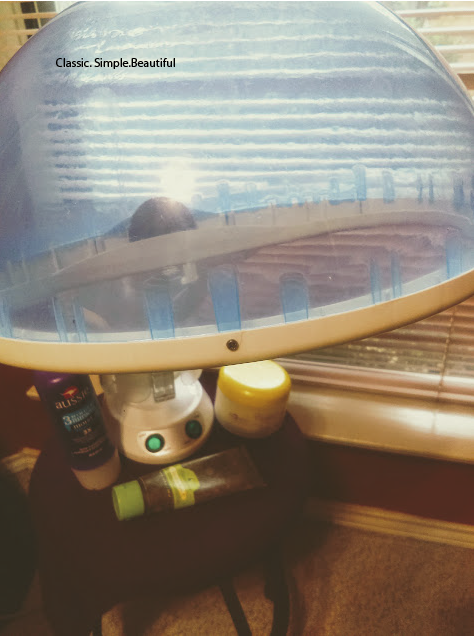
I began by first shampooing my hair twice with Aphogee Keratin & Green Tea Shampoo. I chose this shampoo because I would be applying heat and I wanted the additional infusion of keratin to protect my strands from the blow dryer. After shampooing I applied my moisturizing conditioner (Aussie Moist 3-Minute Miracle) and thoroughly detangled using my paddle brush. I rinsed after 3 minutes than applied my Macadamia Oil Deep Repair Mask and sat beneath my steamer for 30 minutes.

I allowed my hair to cool down after steaming, then rinsed and proceeded to moisturize and prep for blow drying.

Moisturizing & Blow Drying

To moisturize my strands I used my Jane Carter Solutions Curls To Go Untangle Me Leave-In Conditioner as well as the Mist Me Over Hydrator from the same line.  Where I would typically use a quarter-sized amount and simply finger comb the product throughout my strands, this time I sectioned my strands into four quadrants and added a quarter-sized amount to each section. I then brushed the product through with my paddle brush to ensure even distribution. Because I intended to use heat to stretch my hair for the braiding process I also applied a dime sized amount of Kera Mineral's Smoothing Leave In Conditioner to each section as a heat protectant.


I used a combination of the tension method, the comb method, and the flat brush method to blow dry my hair and ensure maximum straightness. Working with small one inch sub sections within each quadrant I applied the tension method by gently pulling the section downward and running the blow dryer (with concentrator nozzle) downward to stretch and dry the section. Once the section was about 90% dry I then used my flat brush to apply greater tension and further straighten each section. I honestly could have stopped here but I ran the blow dryer one last time down my strands and chased it with my wide tooth comb simply to be absolutely positive that my hair was dry, stretched, and thoroughly detangled. 

This entire process took me about 40 minutes and I realized that my hair is not nearly as coarse and unmanageable as I have always thought it to be. I have always been somewhat intimidated by the density, thickness, and tightly coiled nature of my strands, and assumed that because it didn't 'look' easy to manage in the same way as my relaxed hair that it would be difficult to blow out and straighten the way I did my relaxed hair. I was clearly wrong and have a new understanding of my hair and what it is capable of.

Once my hair was completely dry I added a dime sized amount of Jane Carter Solution Curl Defining Cream to each quadrant for extra moisture then secured each section with a ponytail holder to keep it stretched and prevent tangling. Due to my preparation the braiding process was quick, easy and virtually painless. 

How do you prepare for a protective style?


Tuesday, June 19, 2018

Summer Wash Day Routine for Naturals


This Summer my goal is to keep my hair routine simple while maximizing moisture and maintaining length. To reach these goals I am instituting two main elements into my routine: Wash and Go's and Low Manipulation styles. Both style choices require similar wash day prep and the routine I have created has been instrumental in maintaining moisture for days at a time and limiting manipulation.

Whether I am protective styling or doing a wash and go my routine contains the following elements:

Cleansing

One thing I have learned as a second-time natural is the importance of a good quality shampoo and how regular shampooing aids in the health of both your scalp and hair. As I mentioned in my MHM Review post, I do still use a clay cleanser but it is accompanied by a quality shampoo. Depending upon the week and my hair's needs I alternate between a protien/strengthening shampoo, a moisturizing shampoo, or a clarifying shampoo.

Prior to shampooing I do not dentangle, add oil, or do any sort of pre-poo step; I simply jump in the shower and allow the water to run through my strands for 1-2 minutes. Once my hair is weighed down and fully wet I apply my shampoo. I currently have three shampoos in my rotation: Carol's Daughter Black Vanilla Moisturizing Shampoo, Kinky Curly Come Clean, and Aphogee Green Tea & Keratin Shampoo. I have found that all three of these aid in detangling so once my hair is lathered I do a quick finger detangle with the shampoo still in before rinsing.

If I am using a clay mask I will apply the mask to my hair and use it to further finger detangle my strands. I do not allow the mask to sit for longer than five minutes. If I am not using clay I will lather a second time with shampoo to insure  my hair and scalp are completely clean before I proceed to conditioning.

Conditioning

Rather than alternating between a protein and moisturizing conditioner each week I've opted to use both on every wash day. However, my hair's needs for the week determine which conditioner I use as a deep conditioner with my steamer. I currently have four conditioners in my line up: Aphogee Keratin Two Minute Reconstructor, Aussie Moist Three Minute Miracle, Aphogee Curlrific Texture Treatment, and Macadamia Natural Oil Deep Repair Mask. While still in the shower I apply my rinse- out conditioner and allow it to sit for a few minutes while I do my shower duties. After rinsing, wringing out excess water, and wrapping my hair in a t-shirt I prep my steamer for use. Once I apply my deep conditioner of choice I use a paddle brush to completely detangle my strands before sitting beneath my steamer for 30 minutes. I like to allow my hair to cool before I rinse out my deep conditioner, just to allow my cuticles to close naturally. After cooling and rinsing my DC I wring excess water from my hair and allow my t-shirt to dry my hair before I apply my stylers.


Styling

I have only recently perfected my wash and go process and found the proper stylers to keep my hair moisturized while making my curls pop. To prevent product build up (and save money) I keep very few stylers in my stash and apply a minimum of two products. I begin by applying a moisturizing leave in on damp hair. My current leave-ins are Jane Carter Solutions Curls to Go Untangle Me, and Kinky Curly Knot Today. I apply about a quarter sized amount of leave in throughout my strands and work it through using my fingers to rake and smooth. Because my hair is still so short I don't bother sectioning but I do make sure to apply the product evenly throughout my strands. My current styler of choice for definition, moisture and hold is the Aphogee Curlrific Curl Definer. I intend to do a full review of this product but let me just say it is AaaaMazing!! When applying the curl definer I do work in sections (although I still do not part my hair) and apply about a nickle sized amount working it in generously, making sure to rake and smooth the product in until I see my coils and curls begin to separate and elongate. After the product is completely applied, if my curls still aren't clumping the way I know they are capable, I will either re-wet my hair with a spray bottle or dip my hair back beneath the shower head. The final step is a good shake to further encourage clumping before applying a clean t-shirt to soak up excess water for 15-30 minutes to speed up the drying time.

 
Day 5 Results


I am currently rocking a protective style for the month (post coming soon) but prior to install I was doing wash and gos weekly. With the aforementioned routine and products I have been able to stretch my wash days for a full five (sometimes six) days! This is huge for me because with my prior product choices I could only manage to go three days between washes because my hair would quickly dry out. With this routine not only am I getting great curl definition and lasting moisture but I am able to style my hair in under an hour leaving my free to enjoy my weekend. What else can a girl ask for?

What is your Summer Wash Day Routine?

Monday, July 13, 2015

I Big Chopped


Some times you have to start over. At least that's what I told myself six weeks ago sitting in my stylist's chair trying to mentally prepare myself for this cut. My hair had been growing just fine and despite the slight breakage I received from the Spring Wet Bun Challenge I was still well on my way to waist-length strands, but I wasn't satisfied with the overall health of my tresses.

Maybe it was the 3 months of bunning or the addition of the color, but I was just dissatisfied with my hair. I felt it looked dull and lifeless and needed an infusion of style. I also hated the amount of split-ends I was seeing (even after trims) and the lack of uniformity in texture from root to tip of my strands was driving me nuts. 

With this new cut I am taking it back to the basics and keeping things simple. Because of my length and texture I will be using hot tools rather than roller setting or twist outs, but I am confident that I can retain length and see the level of health I want using minimal heat once per week.

Maybe I am a perfectionist & the level of hair perfection I seek is unattainable but I felt I needed a fresh start in order to have the healthy hair I envision.

How has your hair changed this year?

Friday, June 12, 2015

The Cause of My Breakage


I have been meaning to write this post for weeks but have been busy with other things. I visited my stylist about three weeks ago for some routine maintenance and got a chance to ask her about the breakage I was suffering. As it turns out my theory was correct and the breakage was due to the buns I had been wearing. My stylist noticed that I had another area of breakage in the exact spot on the opposite side of my head, and there was a thin line of broken strands across the base of my hair - exactly where the ponytail holder would meet my strands. 

My stylist offered the following tips to minimize breakage:

Cut back on buns
Although protective styling can be beneficial for lenght gains, as with anything too much can end up having a negative effect. She suggested I bun 3 days out of the week or find other protective styles that hide my ends.

Make sure hair is well oiled & moisturized prior to bunning

I though my hair was moisturized given that I was bunning on freshly washed (or co-washed) strands, after applying leave-ins. What I was not doing was using a creamy moisturizer or heavy oil to seal. My stylist suggested the use of a quality creamy moisturizer and at least a dime sized amount of oil to seal.

Use Satin or Silk covered ponytail holders

I was using covered elastic bands without the metal as I thought this was enough to prevent breakage, this is not the case. From now on I will be using satin or silk covered elastics to secure my strands.

Overall the breakage I am seeing is quite small but it really got me thinking about my focus and my hair practices. For the past year my goal has been length retention rather than health. This setback was exactly what I needed to change my focus and remember what is important.

Have you experienced breakage from buns and ponytails? How did you bounce back?


Saturday, May 2, 2015

Dealing With Breakage


Just when I thought I had reached my ideal state of healthy hair & I could cruise through the Spring & Summer months I part my hair and find breakage has once again reared it's ugly head. Since I have a few things working against me at the moment (texlaxed, color treated & bunning constantly) I am not exactly sure of the cause of the breakage at this point.

 The position of the breakage (with the bone straight pieces) indicates the breakage is due to the difference in the textures, one area being texlaxed (more like severely under processed) and the ends being virtually bone straight. 

I have also been bunning constantly which is known to cause breakage where the ponytail holder meets the hair - the position of the breakage is exactly where the ponytail holder would wrap around my strands. 
The fact that my hair is both relaxed and colored and therefore extremely dry also contributes to the breakage factor.


I have an appointment with my stylist in about 2 weeks for a relaxer and trim and I am hoping she can pinpoint the exact cause of the breakage, but until then I plan to keep my regimen essentially the same. The only change I plan to make is to bun my hair when it is completely air dried and stretched rather than soaking wet. Hopefully things will not get any worse over the coming weeks and I can come up with a plan to stop the breakage completely and begin nursing the area back to health.

How do you deal with breakage & setbacks?

Thursday, April 23, 2015

The Key to Co-Wash Success


Until recently as a texlaxed girl I have found co-washing to be pointless & not at all beneficial to my strands. Each time I would attempt to add co-washing into my routine I would end up cutting the practice after a week because I did not like the way it left my hair feeling. Now that I am both relaxed & colored moisture is a must and I am taking every precaution to ward off breakage and maintain the health of my strands - this is where co-washing comes into play.

Since March I have followed my Routine for Damaged Hair which includes co-washing at least 3 times a week. Not only has my hair grown during this time (visible black roots with red lengths) but I have not seen any breakage and split ends are virtually non-existent. I have yet to experience the build-up, mushy strands, and overall feeling of disgust I used to have with co-washing & I attribute my positive experience to the following key factors:

Use a Quality Conditioner
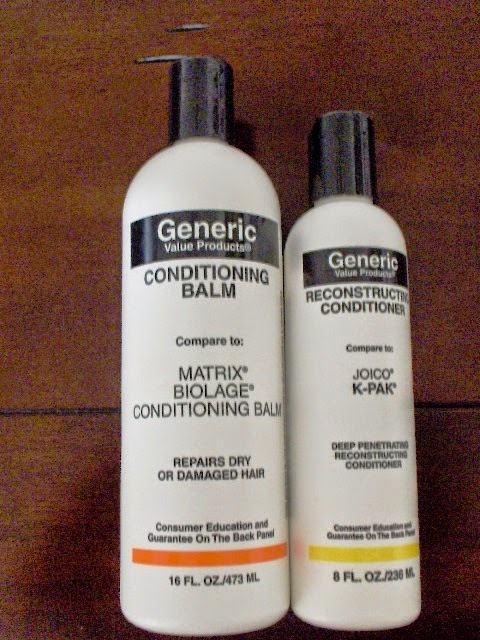
Most women who co-wash prefer to use cheap conditioners that can be bought frequently without damaging the pockets. I'm as spend conscious as the next girl but  I would rather sacrifice a few dollars each month on a quality product than deal with lack-luster strands. For my co-washes I have used two conditioners (1) Matrix Biolage Conditioning Balm & (2) Joico K-Pak. Both of these products contain quality ingredients, do not strip the hair, & rinse cleanly from the strands.

These products are a bit on the pricy side, but Sally's sells the GVP brand that works just as well. Check out my review of the GVP brand here.

Avoid the Scalp
In the past I would co-wash my hair as if I were shampooing, meaning I would apply a bit of the product to my roots and gently massage it in. I thought I was cleansing my scalp since the cheap-y conditioners I was using contained sulfates similar to those found in shampoo; but my itchy, flaky scalp told me otherwise. Now when co-washing I apply product to the ends of my hair and work my way up the strand but avoid applying any product to the roots/scalp area. I have noticed that using my fingers to gently massage my scalp while standing beneath the stream of the shower will loosen any dirt and debris and rinse it away without my needing to apply product. 

Rinse Hair Thoroughly
Several women swear by leaving a bit of their conditioner in - they say this promotes moisturized hair. For me, if conditioner is not completely rinsed my hair is left feeling coated and sticky rather than clean & refreshed. I found that conditioners like V05 did not rinse easily which left me with limp strands and product build up. Rinsing completely helps combat product build-up which can lead to any number of hair issues.

Use A Quality Shampoo Once Per Week
It is no secret that frequent co-washing can lead to product build up. Using a quality shampoo to completely rid strands of any excess product is a must for anyone who co-washes with regularity. I would recommend using a good clarifying shampoo at least once a month, but because my hair is colored and I do not want to cause fading I opt to shampoo with a well formulated sulfate shampoo monthly and sulfate-free shampoos in-between.

Co-washing with the right method and conditioner has changed my perspective on the practice. I can't say this is something I would do if I were not texlaxed and colored, but for those of us with extremely dry and/or damaged hair co-washing can work miracles.

What is your favorite co-wash conditioner?

Saturday, March 14, 2015

Preparing for Color


Next Saturday I am having my hair dyed red and because my hair is relaxed (i.e. already chemically processed) I am taking every precaution to ensure that the damage caused by the coloring process is minimal. I began talking with my stylist about coloring my strands a little over six weeks ago and after expressing my hair goals (reaching WL and maintaining healthy strands) she agreed to color my hair 4 weeks after my relaxer service using a low-volume developer to prevent excessive damage to my already processed strands. 

Immediately after my relaxer I began preparing my hair for color in much the same way I do for a relaxer. For the past 3 weeks my routine has been as follows:

Saturday:
  • Pre-poo on damp hair with Coconut Oil for 1 hour
  • Shampoo with a sulfate-free, moisturizing shampoo
  • Condition with a moisturizing conditioner for 5 minutes
  • Deep condition with a protein conditioner for 15 minutes (with heat) - half way through the process I added Hot Six Oil on top of the protein conditioner for moisture/balance.
Tuesday:
  • Shampoo with a sulfate-free, moisturizing shampoo
  • Condition with a moisture-based conditioner that contains protein
My focus has been the replenishment of the protein lost during the relaxer process and restoration of my hair's moisture levels while also strengthening my strands for the onslaught of additional chemicals.  I have steered clear of heat styling tools in favor of twist outs to quickly set my strands and add some texture. Because of the additional wash & condition session mid-week my hair has felt softer and more moisturized than usual and as the weather warms I am considering adding the additional session back into my routine.

For anyone contemplating having their hair colored I offer these suggestions:
  • Discuss your coloring options with a professional
  • Wait at least 3 weeks after your relaxer before coloring
  • Be prepared to step up your DC routine
  • Make sure your hair is healthy beforehand - color is a damaging process and having the process done on damaged strands will only do additional harm

How do you prepare for chemical services?

Thursday, February 26, 2015

Coconut Oil & Relaxed Hair


As a natural I used coconut oil religiously - that is until I realized it was making my hair hard, dry and crunchy. My natural hair was protein sensitive, meaning too much protein and my hair would turn into a hard & tangled mess, this was why my hair reacted adversely to Coconut oil. Coconut oil does not contain protein but acts as a barrier preventing the loss of protein from within the strands. For the protein-sensitive use of the oil may produce the same straw-like feeling of a protein treatment/protein containing products.

Since then I have opted for oils such as Castor, Jojoba, and Olive to provide my hair with the softness, sheen, and moisture-retention it needs.But now that I am relaxed again and the protein bonds within my strands are damaged I am thinking I may find Coconut oil more helpful in my journey to healthy, long hair. 

Coconut oil has a number of uses and benefits for both hair and skin and I am sure many of you are familiar with these so I will not list them. Instead I want to focus on the benefits I am looking for and the best uses for deriving those benefits.

Benefits


Stimulates Hair Growth
Massaging the scalp with Coconut oil is said to stimulate the hair follicles and thereby stimulate hair growth. In my quest to WL strands I am all about scalp stimulation and growth.

Prevents Hair Breakage & Split Ends

I like to take a proactive approach to breakage an split ends. Due to the molecular structure of Coconut oil it is said to have the ability to penetrate the hair shaft and prevent damage from the inside out. Strong strands mean fewer splits and less breakage.

Reduces Protein Loss

 Relaxers result in a loss of protein which is why protein treatments are paramount for relaxed ladies. I also intend to color my hair within the next four weeks, resulting in further protein loss. I am hoping that the use of Coconut oil along with regular protein treatments will fortify & strengthen my strands with the protein they need.

Moisture Retention

Coconut oil is said to retain moisture which is necessary to both length retention and the overall health of your tresses.

Uses

  • Scalp massage
  • Pre-shampoo treatment
  • Sealant
  • Oil rinse
  • Deep Conditioner
  • Moisturizer
I am heading out to my local Vitamin Shoppe to  to pick up a jar of un-refined, un-processed, 100% virgin Coconut Oil today and plan to incorporate it into my wash day this Saturday.

Have you tried Coconut Oil?

Sunday, February 15, 2015

Tips for a Successful Salon Visit


Visiting a professional stylist can be a welcomed break from the monotony of your hair regimen as well as a key factor in the maintenance of your hair's health; but the idea of trusting your hair to someone else can be nerve-racking. The following tips should ensure a smooth  process for both you and your stylist of choice:

Schedule time to meet with your stylist prior to making an appointment. 
This will allow you the opportunity to see the stylist in action. How they handle stress, whether or not they work on multiple clients at a time, double-book appointments, rush or take their time are all indications of how your appointment will be.

Discuss your current hair practices and goals.

 Discussing how you handle your hair and your goals will give the stylist an understanding of how they should and should not handle your tresses. For example, prior to receiving a trim I shared with my stylist the fact that I had a desire to reach WL this year. As a result when she trimmed my hair she took off about 3/4 an inch.

Allow the stylist to "analyze" or familarize themselves with your stands.
The point of seeing a professional stylist is to get a professional perspective on the health of your stands. A good stylist will tell you the true condition of your tresses and will also provide tips for at-home maintenance. Additionally allowing the stylist to inspect your hair beforehand will give them an idea of what products to use as well as the best way to handle your strands. For example, I texlax my hair and prior to scheduling my relaxer I shared this with my stylist. She immediately indicated the type of relaxer she felt was best to maintain the texture I desired and how she would apply it.

Bring your own products if necessary
If you are going for a relaxer and your stylist uses Mizani but you like Affirm, don't be afraid to bring your product of choice. I would suggest letting the stylist know your plans beforehand and negotiating a new price for the use of your own products.

Prepare your hair at home
Detangle your hair before you visit the stylist. If you are going for a relaxer base your scalp and apply whatever product you use to protect against relaxer run-off. I would also suggest doing a protein treatment the week before if your stylist is going to skip the mid-step protein treatment.

Next Saturday I am getting my hair relaxed in a Salon for the first time in more than 12 months and although I am excited about the prospect of someone else handling my hair for a change I am also taking steps to ensure the integrity of my strands remains intact. 

How do you prepare for a salon visit?

Thursday, January 22, 2015

5 Signs You're Overdue for a Trim


If you are a licensed "kitchen beautician" like me you opt for occasional 'baby' or 'light' trims rather than thorough trims 2- 3 times per year. This light dusting can actually do more harm than good and lead to bigger issues (i.e. breakage) down the line, which is why I have an appointment this Saturday with my stylist for a professional trim. 

I want to give my hair a fresh start this year and eliminate any scraggly or worn ends I have been holding on to in an effort to save length. Although my hair is healthy overall I am starting to notice the following tell-tell signs that I am in need of real trim.

Split Ends 

I can count on one hand the number of times I have used heat in the past six months, I moisturize and seal daily and keep my protein-moisture balance in check; yet I still see split ends. It seems these dreaded splits cannot be avoided no matter how much I pamper my tresses.

Bent/Knotted Ends 

I have noticed a number of SSKs appearing at the ends of my strands - and here I thought I left them behind once I went back to relaxing. Although this may be attributed to wearing my hair in flex-rod sets I have noticed some bending in my ends as well.

Last Trim More than 6 Months Ago

I lightly dusted my ends about 8 weeks ago when I self relaxed, but I have not had a professional or "real" trim (meaning more than 1/4 inch removed) in over 1 year.

Uneven Layers

Part your hair down the center and braid each side (if you can), do both braids fall at the same point on your body? If not you are due for a trim.

Little Hairs on the Sink/Floor

Last night and this morning after moisturizing and sealing my strands I noticed a small collection of strands pooled on my bathroom floor. Each strand looked about 1/2 inch in length and there were at least 10 little hairs.

We can take the best care possible of our tresses but overtime our strands become worn no matter how well we treat them. If you are experiencing any of the above symptoms you may be overdue for a good trim.

When was your last trim?


Tuesday, January 20, 2015

The Improtance of A Professional Stylist to Your Hair Journey


For many of us once we began our healthy hair journey we end our visits to our stylists. We trade in bi-weekly Saturdays in the salon for weekly co-washes and homemade deep conditioners; we forgo thorough trimming sessions for "baby" trims and monthly search & destroy sessions. We spend hours learning the ins-and-outs of our hair and building the perfect regimen; and our hair thanks us for it.

I have not been to my stylist in over a year and although I have had a few minor setbacks I am confident in the overall health of my tresses and I have consistently met my length goals throughout the course of my journey. That being said I am also aware of some weak areas (i.e. some under processing due to self relaxing, slight breakage from self relaxing, and the need for a thorough trim), and I feel that a visit to my personal stylist would quickly and easily rectify these issues and give me a fresh start to meeting my hair goals for 2015.

Although we take great care with our tresses and know each strand intimately I do believe in some cases we may limit our hair's growth potential or cause unnecessary setbacks when we completely eliminate the sharp (and trained) eye of a professional stylist from our hair care regimen. A good professional stylist is a great resource to have at your disposal throughout your hair journey not only for the wealth of knowledge they posses, but for their experience and ability to handle certain situations that may result in setbacks were we to handle them alone.

Like most of you I have big plans for my hair this year including experimenting with color and reaching new lengths. I want to have fun with my strands while providing them with the highest level of care possible to ensure continued health and growth. Although I plan to continuously care for my hair at home on a daily basis I would like to implement the use of my professional stylist for the following services:
  • Chemical Relaxing - I will continue to relax every 12 weeks but will allow my stylist to do the application.
  • Color Services - I plan to add some color this Spring and will be enlisting the help of my stylist to do so
  • Thorough Trims - I have yet to figure out a trimming schedule and depending upon my hair's needs I may forgo search & destroys and baby trims in favor of 2-3 good trims per year.
When used in conjunction with rather than as a substitute for a healthy hair care regimen, a professional stylist can be a great enhancement to our hair care journeys.

Have you visited a salon lately? 

Saturday, January 10, 2015

Relaxer Talk: The Two Most Critical Stages of Your Relaxer Stretch

The breakage mishap I suffered during my last relaxer as well as my recent struggles with stretching have lead me to think critically about the different stages of the post-relaxer stretch. 

The relaxer process is inherently damaging and weakens our strands with every application. We try to mitigate the harsh affects of the relaxer process by doing mid-step protein treatments and deep conditioning; adding oil to our relaxers and coating our the length of our strands prior to applying the chemical. These steps are important to prevent damage on relaxer day, but what about the weeks that follow? I have discovered two stages of the post-relaxer phase during which my hair is the most susceptible to breakage and thereby requires a bit more TLC to stay healthy.

1 - 2 Weeks Post Relaxer - Dry Hair

Hot Oil Pre-Poo
Pre-poo-ing is something I do with every wash but right after a relaxer I do a special hot-oil treatment with olive oil rather than my usual Hot Six Oil application. Heating up the olive oil and sitting beneath my hooded dryer for 30-45 minutes prior to shampooing helps to both soften and moisturize my hair and keep it from feeling stripped after the shampoo process.

Shampoo
I find my hair to be a bit dry right after relaxing and it usually takes a few shampoo sessions before it feels normal again. During this time I like to use a sulfate-free moisturizing shampoo to help replenish the moisture I lost during the relaxer process.

Conditioning
Under normal conditions I like to use a mild protein treatment followed by a moisturizing conditioner during each wash; however, since my hair is dry after the relaxer process I eliminate the protein and focus on moisture. Once my hair returns to normal I re-incorporate protein into my regimen.


12-14 Weeks Post Relaxer - Increased shedding & tangling

Shampoo
Although I shoot for long stretches I find that after 13 weeks my hair becomes increasingly difficult to handle and sheds and tangles like crazy. After week 12 I switch to a sulfate shampoo (or sulfate free) that contains Keratin due to the fiber's ability to reduce frizz and tangles while leaving the hair smooth and strong.

Conditioning
I like to up the ante on my conditioning treatments and alternate between hot oil treatments (after shampooing) and moisturizing deep conditioners; I also switch from mild protein treatments to stronger treatments. The protein relaxes my new growth tremendously, strengthens the line of demarcation to prevent breakage, and creates a smoother finished result.

Often we put so much focus on the relaxer process itself that we lose sight of the changes in our hair's needs during our relaxer stretch. I am willing to bet that for most women damage happens not during the relaxer process but in the weeks that follow.

When is your hair most fragile?

Tuesday, December 30, 2014

Relaxer Talk: When Relaxing Goes Awry


Until now my hair journey has gone off without a hitch; I have not experienced any setbacks and when I did encounter an issue it was minor and easily fixed. Unfortunately I am currently experiencing my first setback and  albeit a minor one, it is a setback nonetheless.

I relaxed my hair on November 23rd using Silk Elements ( I will post the details of the process eventually :-) and shortly after I noticed a small section of my hair (what would be considered my bangs had I any) was significantly shorter than the rest of my hair. I kept inspecting the area and noticed the ends were split - so split it looked like I had dandruff or little white flakes in my hair - it dawned on my after a few days that I had breakage. 

I am convinced the breakage occurred during the relaxer process but I am not sure of the exact misstep I made, the only thing that differed was my choice of relaxer - instead of using the Silk Elements with Olive Oil I used the regular formula without. The affected area was only about 1/2 an inch in diameter and after six weeks of simply trying to nurse the area back to health I decided it would be better to trim the damage away. I took off about 2.5 inches and now I have a small section that falls to my eyebrows rather than my shoulders. 

The damage was so minor it is not at all noticeable to any one other than myself, but knowing that despite my efforts I had caused damage to my strands was quite overwhelming. Moving forward I may go back to having my hair professionally relaxed in a salon rather than self relaxing at home. If you choose to continue to self relax I offer the following tips:
  • Do not switch relaxers without doing a strand test first
  • If the relaxer you use does not already contain an oil (olive, coconut, etc.) consider adding a table spoon to your mixture before applying
  • Find a trusted friend to apply the chemical
  • Be sure to thoroughly rinse, shampoo and condition your hair after the application process
  • Use both a protein and moisturizing conditioner 

Have you experienced breakage after a relaxer? How did you bounce back?

Tuesday, November 4, 2014

Heat Usage: Preparation & Follow-Up


Flat irons (and hot tools in general) are portrayed as the arch-enemy of any girl on a healthy hair journey working her way to longer lengths. If you want your hair to grow you are reprimanded to step away from the heat styling tools and opt for less damaging styling methods such as roller sets and braid outs. While I agree that my hair has reached longer lengths since I cut back on the heat styling, I believe hair can still thrive when heat is used (in moderation) and with the proper preparation and follow up.
 
Last week I straightened my hair for the first time in 4 months and I realized I treated my hair with certain types of products before and after heat styling which helped protect my hair during the styling process and restore it's health after the process.
 
Preparation
  • Use a shampoo containing Keratin for strength and enhanced smoothness
  • Deep condition using a protein based conditioner & follow with a moisturizing conditioner
  • Use a leave-in treatment that doubles as a heat protectant.
Follow Up
  • Use a moisturizing-sulfate free shampoo to replenish moisture
  • Treat hair with a quick protein-based conditioner, then follow with a moisture-based deep treatment.
  • Use leave-ins that replenish moisture & skip the styling aids (gels and mousse)
As always when using a heat styling tool set the temperature to the lowest setting your hair can take while still giving you the desired sleekness.

We work hard to attain our hair goals and as with any journey it is important to stop and enjoy our progress. Treat yourself to that straight style you have been longing to rock and still maintain the health of your strands with the proper preparation and follow up.


Have you heat styled recently?

Thursday, October 2, 2014

Caring for Multiple Textures By Sectioning


During the two weeks I wore my hair in clip-ins I noticed something about my hair I had forgotten since being natural: I have multiple hair textures. Since the front section of my hair was left free (to disguise my extensions) I had a lot of time to examine this part of my hair and I noticed a few key things:

 (1) This section of my hair splits constantly and seemingly for no reason. The splits were bad, I am talking multiples along the strand, and I knew there was a problem when I trimmed one day and saw splits again the next.
(2) These strands are extremely fine. The reason the hair in this section is so prone to splitting is because it is fine and therefore weaker than the medium/course stands that dominate the majority of my hair.
(3) The hair in this section needs to be handled differently than the rest of my hair. Because this hair is inherently weaker than the rest of my strands it should be handled more cautiously and may also require different products than the majority of my strands.

Once I realized how susceptible this section of my hair was to damage and that it needed a little more TLC than the rest of my strands I decided to change the way I handled my hair by washing and styling in sections based upon texture. The front section of my hair (from the arch of my right eyebrow to the arch of my left going back as far as my ear) is a thin, 3C, possibly porous texture. From the arch of my eyebrows moving toward my ears and back to the nape of my neck is a medium/coarse, 4A/B  texture with normal porosity.

Moving forward I wash and style my hair in sections and coordinate products accordingly:

Top/Front
The thin and possibly porous section of my hair tends to loose moisture quickly, so I like to go a little extra on the protein conditioner to fill in those holes, then follow up with a moisturizing conditioner for balance.

Back Right
The other two sections (I split my hair down the middle) are pretty resistant to damage but I noticed I see a lot more split ends on the right side of my hair as opposed to the left side. I am not sure of the cause of this just yet but while I research I am careful to apply my products on the very ends of my hair on the right side first, then work back up the length of my hair shaft.

Back Left
This section of my hair is possibly the easiest to care for and the least prone to breakage and shedding. I hardly see split ends and it grows a little faster than the right side of my hair so I am usually having to cut a little more off to keep the two sides even.

Since I began sectioning according to texture not only am I seeing less split ends in the front and right side of my hair, but my wash day goes by a lot faster. Handling your hair gently and accordingly is as important, if not more so, than having a specific regimen or using specific products. Working in sections throughout the entire washing and styling process is  critical when implementing healthy hair habits and attaining length goals.


How are you handling your hair?

Wednesday, September 10, 2014

Dry Relaxed Hair: Causes & How to Combat


For the past six weeks I have been experiencing extremely dry hair. By the time wash day rolls around my hair is a crispy, crackly, mess - even when moisturizing and sealing and co-washing in between shampoo sessions. Dry hair is something I had yet to experience on my hair journey, but I have read all about the damaging affects dryness can cause if left untreated. After a little research I have come up with the following possible causes and methods of combat:


Possible Causes

  • Change in climate/location: About six weeks ago I moved from Florida to Texas and although both locations are HOT the Texas heat is a bit drier, not to mention the state is famous for consecutive 100+ degree- temperature- days. I happened to arrive right in the middle of one such heat wave, and temperatures such as these are bound to have a negative impact on both the hair and body.
  • Not moisturizing often enough: For about six weeks I have also been experimenting with twice-a-month wash sessions to gauge the affects on both growth and length retention. Since I rely mainly on moisturizing shampoos and conditioners for effective moisture, my strands have not been effectively moisturized as often.
  • Using ineffective moisturizers: Because I was not shampooing and conditioning as often as normal I had to resort to other means of providing my hair with moisture in-between washes. I have tried co washing, DIY moisture mixes, and daily moisturizing lotions. All of which failed to moisturize my hair as effectively as shampooing and deep conditioning.
  • Too much protein: I purchased my beloved Kera Minerals Smoothing Deep Conditioner about two months ago and have used it after nearly every wash not knowing it contained Sericin which is a protein. I thought this was a protein/moisture balanced conditioner but due to the extreme dryness I am wondering if I am not in fact suffering from protein overload.

How to Combat

  • Hot Oil Treatments: Hot oil treatments are said to improve the hair's moisture balance while improving the affects of dry hair such as split ends. On my last wash day I did two hot oil treatments, one as a pre-poo and another as a follow up to my shampoo and regular conditioner; as a result my hair is much smoother, softer and moisturized.
  • Reevaluate your regimen: because my hair thrives better when shampooed and conditioned every three days, I ditched the two week experiment and resumed my normal wash routine.
  • Try an old product in a new way: Daily moisturizing lotions are completely ineffective when it comes to applying them on my dry hair; however, using them as a leave-in conditioner keeps my hair soft and supple until my next wash day.
  • Balance your protein: Now that I know my favorite conditioner contains protein I will use it sparingly (particularly on those days I plan to heat style), and I will always follow up with a moisturizing conditioner for balance.
 If left to run rampant dry hair is known to cause split ends and breakage which can both lead to the dreaded unplanned hair cut. Keeping a close eye on my hair and how it responds to different climates, products and routines has helped me steer clear of many major setbacks in my hair journey. 

Have you experienced excessive dryness on your hair journey?

Friday, September 5, 2014

Why Understanding Ingredients is Important to Your Hair Journey


For the past few months (unless I was doing a special experiment or relaxer) I have been using my newly beloved Kera Minerals Smoothing Deep Conditioner. I absolutely Love, Love, LOVE this conditioner and I swear by it (especially for those weeks when I am heat styling). To anyone who will listen I have raved about this conditioner, I have written reviews on every website I could and recommended it to friends and family members alike.

After frequent and consistent use I still have nothing but good things to say, but one thing that always bothered me about this product was I couldn't be sure if it was a protein or a moisturizing deep conditioner. Before purchasing the product I scoured the internet for reviews and only found two or three, neither of which indicated whether it was protein or moisture based. I read the ingredient list online at Sallys.com before purchasing, but since I did not see anything specifically stating "protein" (including amino acid) I assumed that it was a moisturizing conditioner and have continued to use it weekly under normal circumstances. 

I was reviewing my wash days, and my hair journey in general for the last two months, and realized that I have not used what I considered a "protein" conditioner (GVP Joico K-Pak, Aphogee 2 Minute Reconstructor) since I relaxed on August 1st. Despite the fact that I had yet to do a traditional or typical protein treatment, my hair seemed to show no visible signs of moisture overload, but I had been experiencing some abnormal dryness for the past month. Since Kera Minerals is the only conditioner I have used for at least one month I again wondered if this was truly a moisturizing conditioner? I took another look at the ingredient list and the name Sericin jumped out at me: 

Kera Minerals Smoothing Deep Conditioner Ingredient List

WATER (AQUA, EAU), CETYL ALCOHOL, BEHENTRIMONIUM CHLORIDE, GLYCOL STEARATE, AMODIMETHICONE, GLYCOL DISTEARATE, CETRIMONIUM CHLORIDE, TRIDECETH-12, POLYQUATERNIUM-7, SERICIN, GUAR HYDROXYPROPYLTRIMONIUM CHLORIDE, CETRIMONIUM CHLORIDE, BENENTRIMONIUM CHLORIDE, PROPYLENE GLYCOL, ROSA MOSCHATA SEED OIL, PEG-75 LANOLIN, BENZOPHENONE-4, SODIUM PCA, FRAGRANCE (PARFUM), TOCOPHERYL ACETATE, CITRIC ACID, PHENOXYETHANOL, CAPRYLYL GLYCOL, ETHYLHEXYLGLYCERIN, HEXYLENE GLYCOL, BENZYL BENZOATE.


What is Sericin?

"SERICIN is a high molecular weight, water-soluble glycoprotein isolated from silk. The  raw material for the manufacture of SERICIN is a top-quality silk grège or raw silk yarn,  obtained exclusively from the domesticated mulberry silkworm (Bombyx mori). " 


What is Sericin Made of?

"There are 18 kinds of amino acids in sericin, among which, serine and aspartate have the highest content." 


What Does Sericin Do?
"SERICIN has a unique affinity with other proteins which allows it to bind very effectively to the keratin of skin and hair, to form a multifunctional protective film. The uniform film formed after the application of SERICIN results from its very high  molecular weight. This substantive semiocclusive film persists even after washing, and  protects the skin ( hair) against harmful environmental influences. The SERICIN film leaves the skin (hair) with a smooth, silky feeling and substantiates several appropriate cosmetic effects. " 

In layman's terms, Sericin is a protein that seals in moisture, protects bonds, and locks hair into a smoother, silkier state. Thus the reason for such a long stretch in-between "protein treatments" was the fact that I was already using a conditioner that contained protein. My guess is this conditioner is a light protein conditioner which is why my hair thrived for the first few uses, but seems drier after several months of continuous usage.

The lesson learned here is the importance of not only reading product ingredients, but understanding the ingredients listed and the functions of each ingredient. I was specifically for the word protein, and because it was not readily apparent within the label I drew an inaccurate conclusion.


[Source: http://www.gerovital.co.ro/sericin.pdf] 
[Source: http://www.sinosilk.com.cn/sericin.html]


Are you reading and understanding the ingredients in your hair products?


Wednesday, September 3, 2014

Pre-Poo Vs. Hot Oil Treatment: Is There a Difference?

I purchased some Hot Six Oil today that I intend to incorporate into my regimen in several different ways; as I thought about the different treatments I could do with the oil my first thought was hot oil treatments followed by pre-poo treatments. This got me wondering what the difference was between the two, was there a difference?

Pre Poo Treatment

  • Applied to the hair prior to shampooing
  • May help prevent hygral fatigue (if using coconut oil)
  • Can be done using conditioner, honey, or oils
  • May be left on anywhere from 5 mins - over night
  • Can be done with or without a processing cap
  • Helps prevent the drying/stripping affects of shampoos
  • Aids in the detangling process
  • Promotes shine and moisture

Hot Oil Treatment

  • Applied on freshly shampooed hair
  • Adds extra moisture to extremely dry/damaged hair
  • Must be done using a processing cap
  • Should be left on for 10 - 15 minutes
  • Promotes shine
  • Helps prevent dry scalp and dandruff
  • Helps disguise split ends
  • Keeps colored hair vibrant
  • Helps prevent frizz
  • Reduces damage caused by styling and/or coloring
 Both treatments can be used weekly depending upon the current condition of the hair (for those with healthy tresses hot oil treatments should be used once per month), and if a pre-poo is done using strictly oils there seems to be little difference between the two treatments.

I have not done a hot oil treatment in several months so I plan to do one on my next wash day. As for pre-poo'ing I have not pre-poo'd for the past two wash sessions and have not seen any adverse affects with my hair. I am not sure when I will re-incorporate this step into my regimen, it doesn't seem to help or hurt my tresses and may be an extra unnecessary step. I am actually thinking about leaving the pre-poo for the occasions when I clarify my hair and when I intend to relax my hair. In between these two situations I will pre-poo as needed if and when my hair feels particularly dry.

Which do you prefer: Pre-poo or Hot Oil?

Monday, September 1, 2014

Keeping My Hair Moisturized In-Between Shampoo Sessions

Since I moved from weekly (or bi-weekly) wash and deep conditioning sessions to bi-monthly (or every two weeks), I have noticed my hair looks and feels a lot drier particularly one week after it has been washed. I thought this would pass as my hair got used to less frequent washes, but it seems that the problem has only grown worse. 

To combat the dryness I have tried everything from hair milks and lotions to spritzes and homemade moisture mixes; they all seemed to work for a day or two but my hair would dry out again and seemed worse than before I applied any product. After inspecting my hair this morning and seeing how dry and brittle it was, I knew I couldn't go another day without my hair getting wet. I did not want to shampoo since I made the choice to shampoo bi-monthly and planned to stick with it; instead I opted to do something I once felt was useless: 

Co-Wash

As a natural I co-washed quite frequently and I often enjoyed the results, but once I made the leap back to relaxing I found that co-washing did nothing for me; in fact this is what I thought of co-washing ------>

But today I realized that statement only holds true if I am using co-washing as a means of cleaning my hair and scalp; however, if my goal is to provide a much needed boost of MOISTURE to my strands then co-washing may be just about perfect. 

The reasons I stopped co-washing once I relaxed again was because I felt it left my hair feeling coated and weighed down, it clung to my scalp and left it itchy and I generally felt my hair was just as dirty (if not more so) than before I co-washed. This time around I understood that I wasn't trying to get my hair clean, I was trying to moisturize it, so instead of expecting the results of this wash to be a fresh and clean head of hair I am looking for softness, manageability, and the sheen that usually accompanies a good conditioning session. 

It looks like another tweak in my regimen may be necessary, or I may simply return to washing and conditioning once a week if not bi-weekly. Finding the perfect regimen is a lot harder than I thought, or maybe there is no such thing? Maybe it is as simple as giving my hair what it needs when it needs it as opposed to following a set schedule or someone else's rules.

Have you tried co-washing?